
White Russian (Ukranian actually)
Some of the Soviet Spectrums I’ve looked at have been aesthetically… challenging. You can’t say that about the Robik. It is quite the cutie. On the outside, it looks amazingly good for a 30-year-old computer.
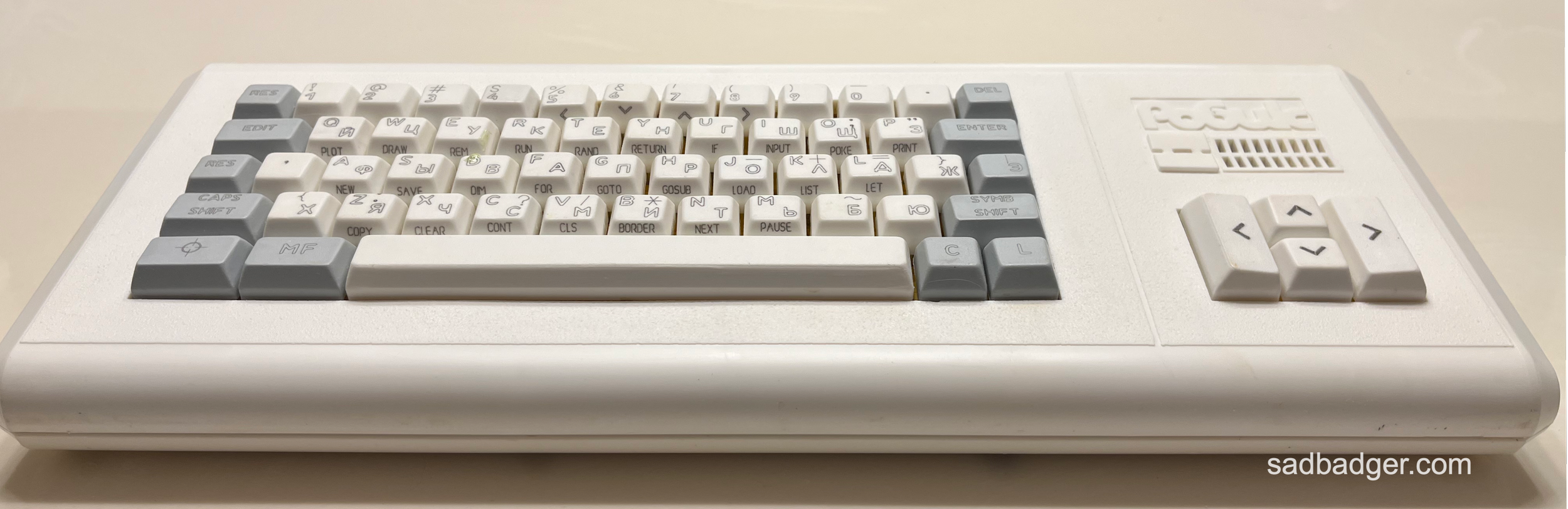
The Robik from above, showing the full keyboard layout
A Spectrum, But Make It Soviet
To understand the Robik, you need to understand what the ZX Spectrum meant to the Eastern Bloc. While Western kids were playing on their Spectrums, Commodore 64s, and Apple IIs, Soviet and Eastern European engineers were doing what they did with a lot of Western technology: reverse-engineering it, cloning it, and building their own version with whatever components they could source locally.
The ZX Spectrum was an especially attractive target. Its architecture was clean, its Z80 processor was already being cloned domestically, and it had a thriving software ecosystem that could be pirated at zero cost. By the mid-to-late 1980s, dozens of Spectrum clones had emerged across the USSR and its satellite states — everything from bare-bones DIY kits published in hobbyist magazines to factory-produced machines.
The Robik sits firmly in the latter category.
Who Made It, and When
The Robik was produced by NPO "Rotor" in Cherkasy, Ukraine, beginning in July 1989 — just two years before the Soviet Union itself ceased to exist. Production continued until January 1998, an impressive run that outlasted the country it was born in. Over its lifetime, more than 70,000 units were manufactured, though the original production targets had been far more ambitious.
It came in four versions, with changes mainly limited to localisation tweaks and, as the years wore on, the gradual substitution of cheaper components as the post-Soviet economy made itself felt. The fundamental hardware stayed consistent throughout: a ZX Spectrum clone with a Soviet-manufactured Z80-compatible processor and enough ROM to run Spectrum software more or less faithfully.
What It Looks Like
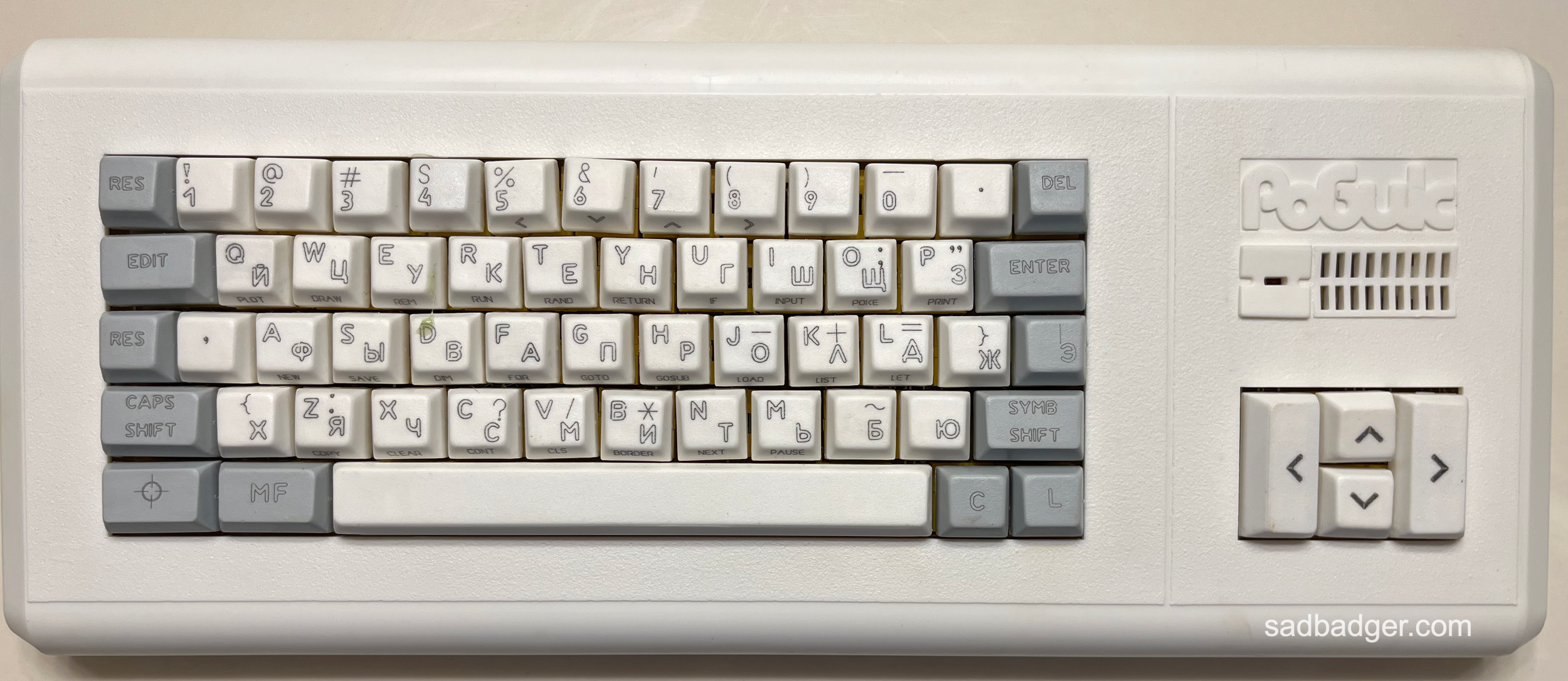
The Robik from above, showing the full keyboard layout
The case is a clean white-cream plastic — NPO Rotor's own moulding — with a solidity that many Western computers of the era can't match. The moment you pick it up you notice it has some heft to it.
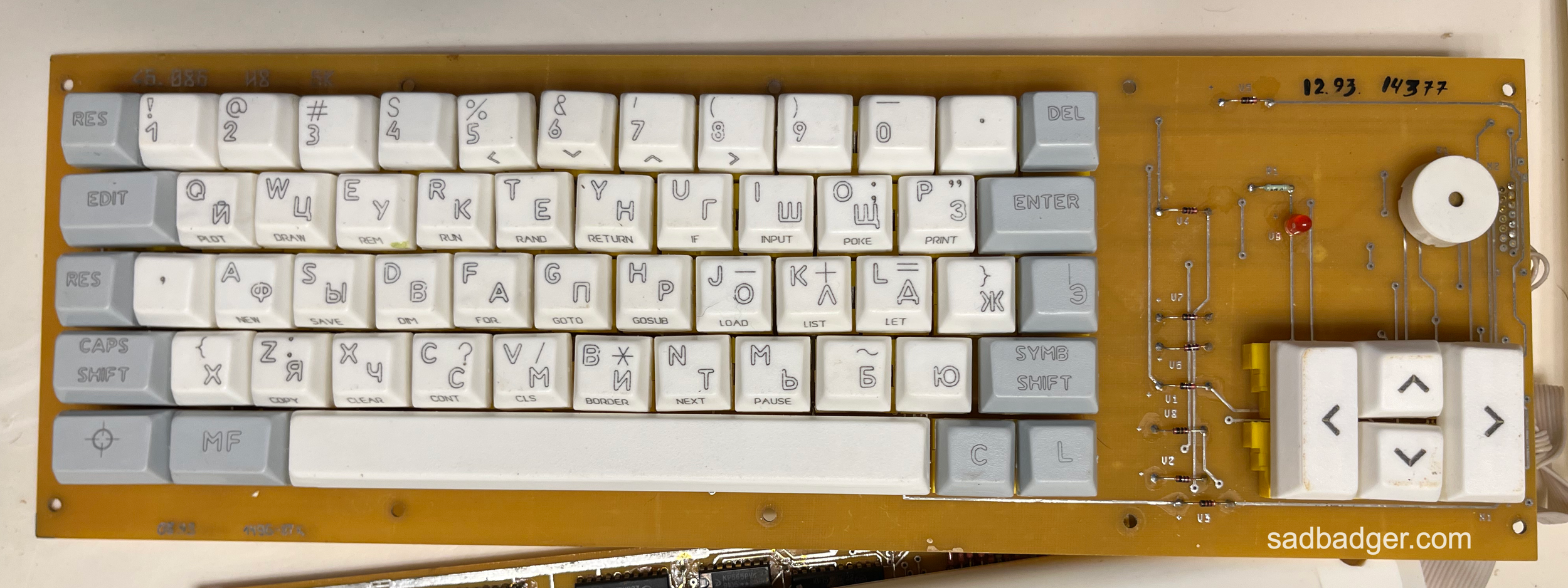
The keyboard removed from the case.
The keyboard is where things get really interesting. Like all Spectrum clones, it inherits the original's dual-purpose key design, but here the secondary characters aren't Sinclair BASIC keywords — they're Cyrillic letters. Every key carries both its Latin character and its Cyrillic equivalent, letting the machine switch between languages. The modifier keys — RES, EDIT, CAPS SHIFT, SYMB SHIFT, MF — are moulded in grey, giving the board a pleasingly clean two-tone look. On the right-hand side, a dedicated cursor cluster sits which sits below a ventilation grille that almost looks like a ZIF socket (but isn't). Moulded in relief on the top-right of the case is the machine's name: Робик — Robik — in a confident, slightly playful typeface.
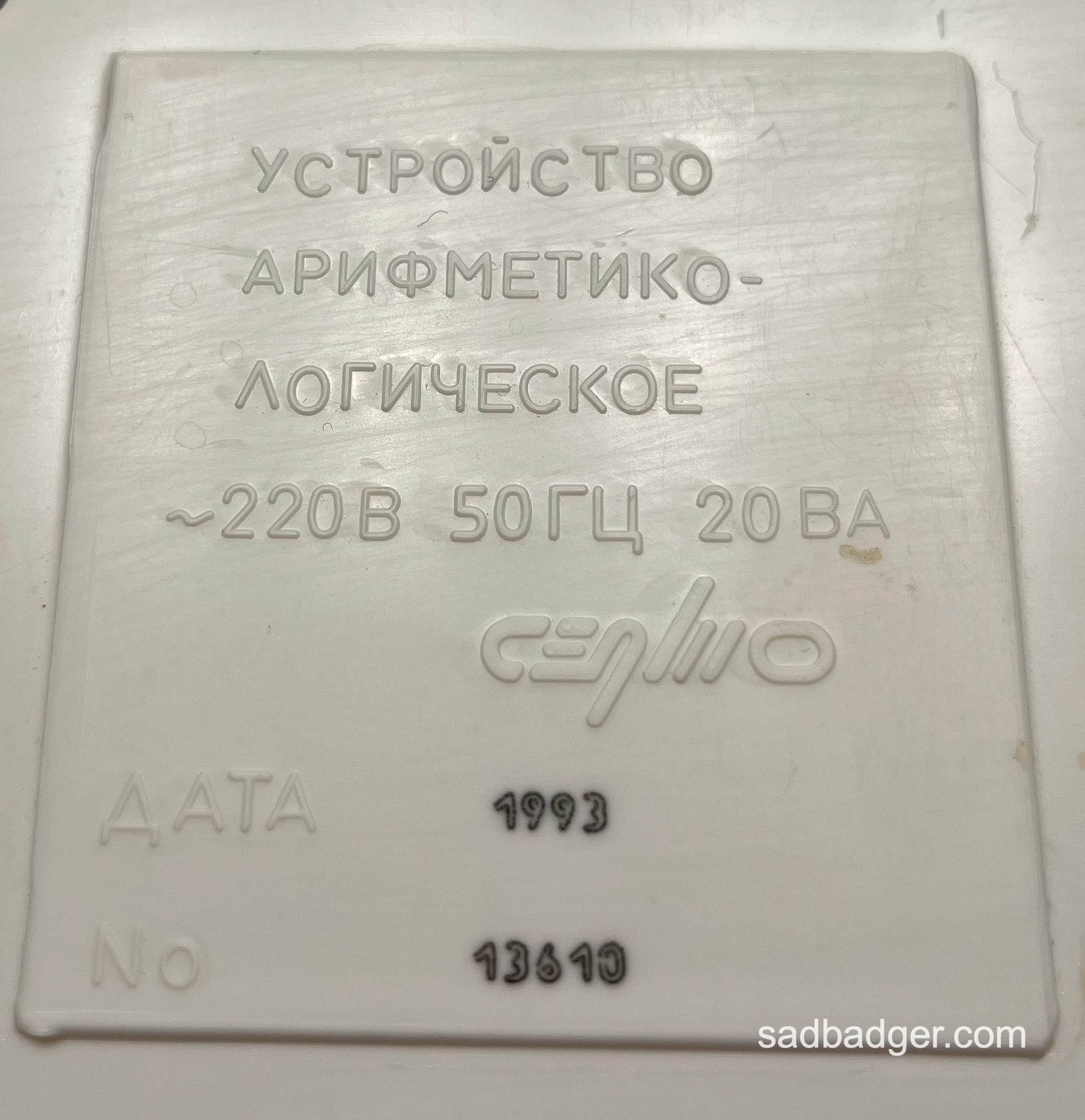
The “label” embossed on the bottom of the Robik.
The embossed "label" on the unit confirms the model and manufacturing details — a small but important piece of provenance on a machine that crossed from one era of history to another.
The Ports
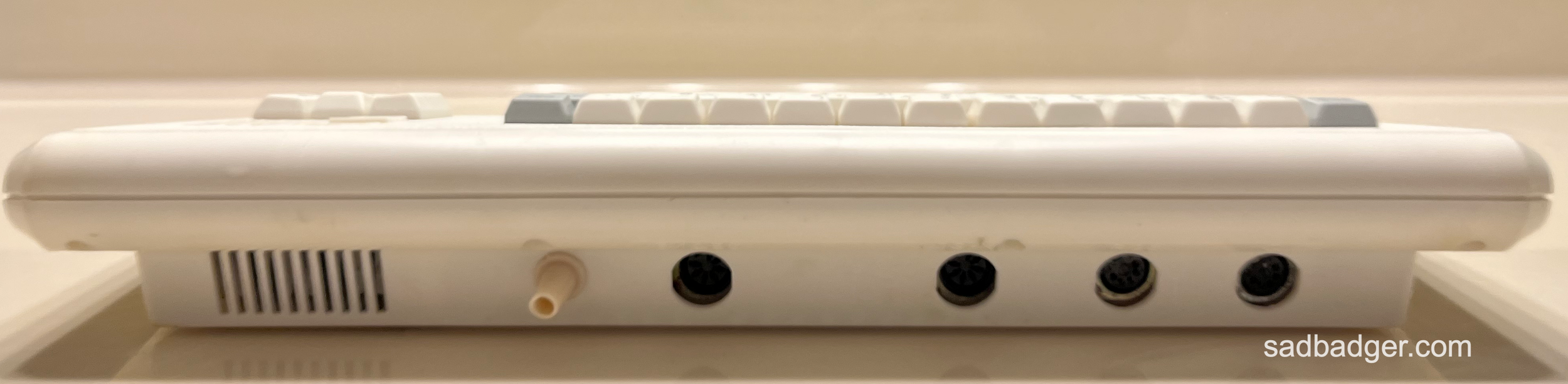
The rear of the Robik showing its port array
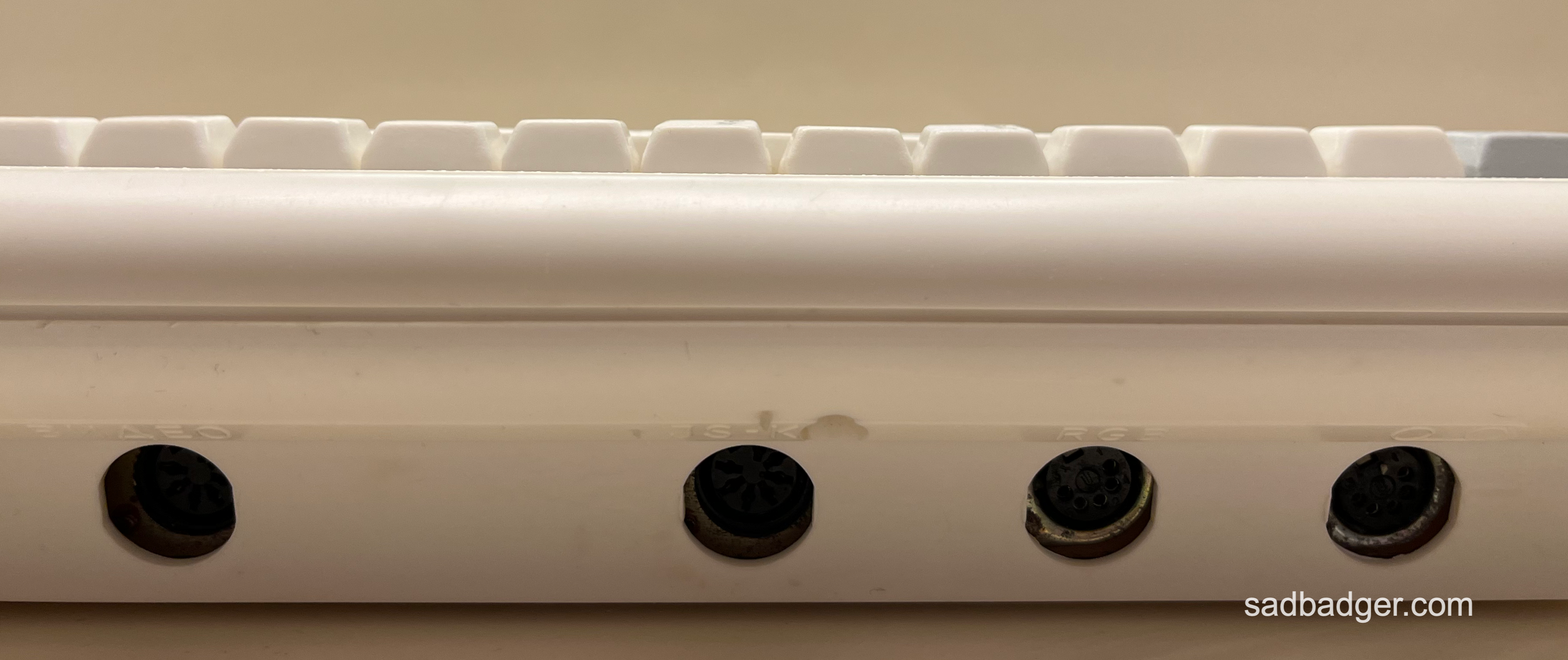
Close-up of the rear ports
Turn the Robik around and you're confronted with one of its more distinctive features: a proper port array. Along the rear panel you'll find:
- RF/mono video output — the white cylindrical connector on the left, for connecting to a standard TV
- Analog RGB video — on a 5-pin DIN, for a sharper picture on a compatible monitor
- Digital TTL video — on an 8-pin DIN
- Joystick port (JS-K)
- Tape interface — for loading and saving programs via cassette
What the Robik conspicuously lacks is the ZX Spectrum's edge connector — the gold-fingered expansion bus on the original that you'd plug Microdrives, Interface 1, and all manner of peripherals into. NPO Rotor evidently decided against it, which limits expandability but keeps the design clean. There's no internal mass storage either; like the original Spectrum, the Robik's primary storage medium is cassette tape. NPO Rotor did produce an external floppy disk drive for the machine, though these are considerably rarer than the computer itself.
Under the Hood
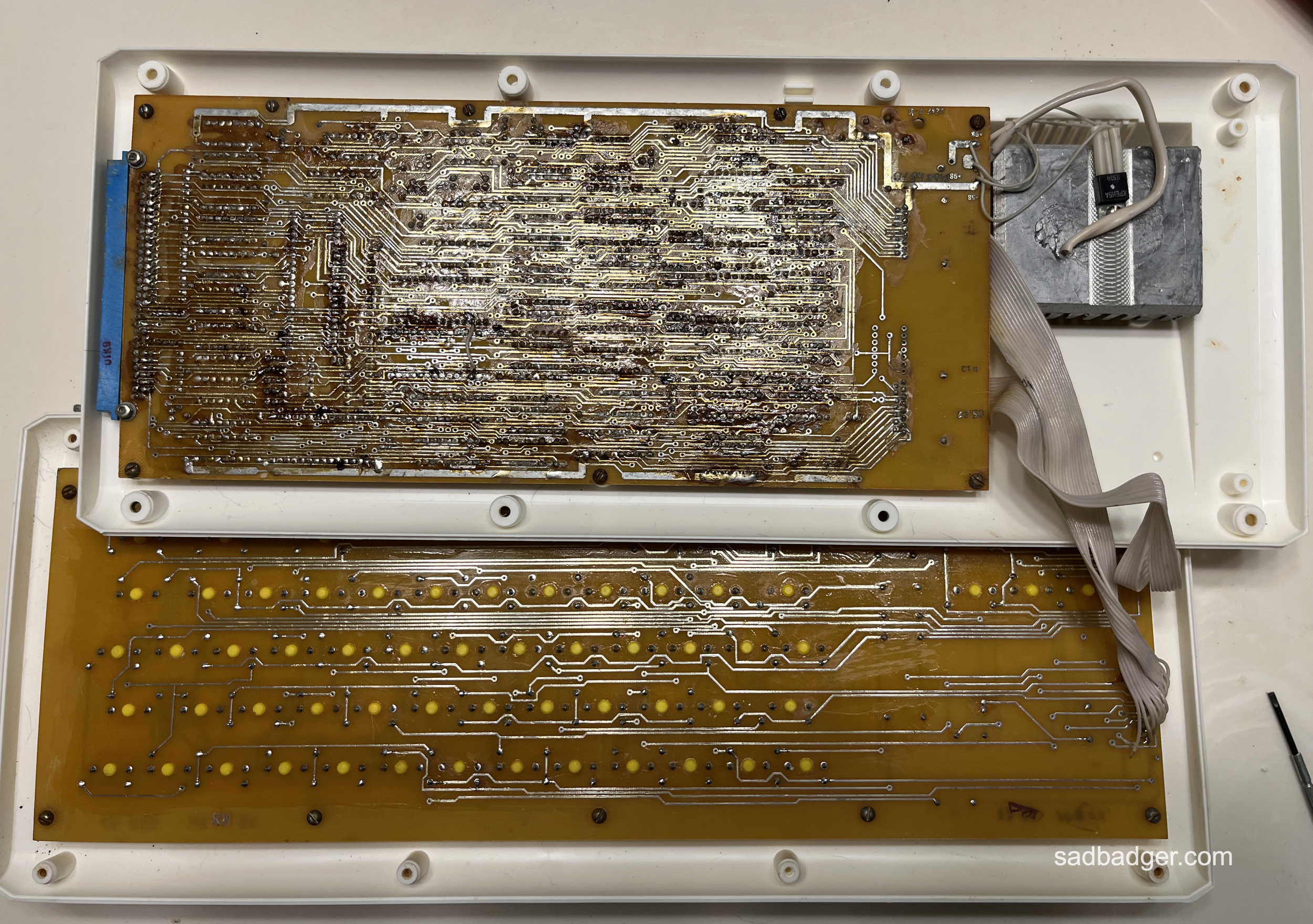
The Robik’s innards.
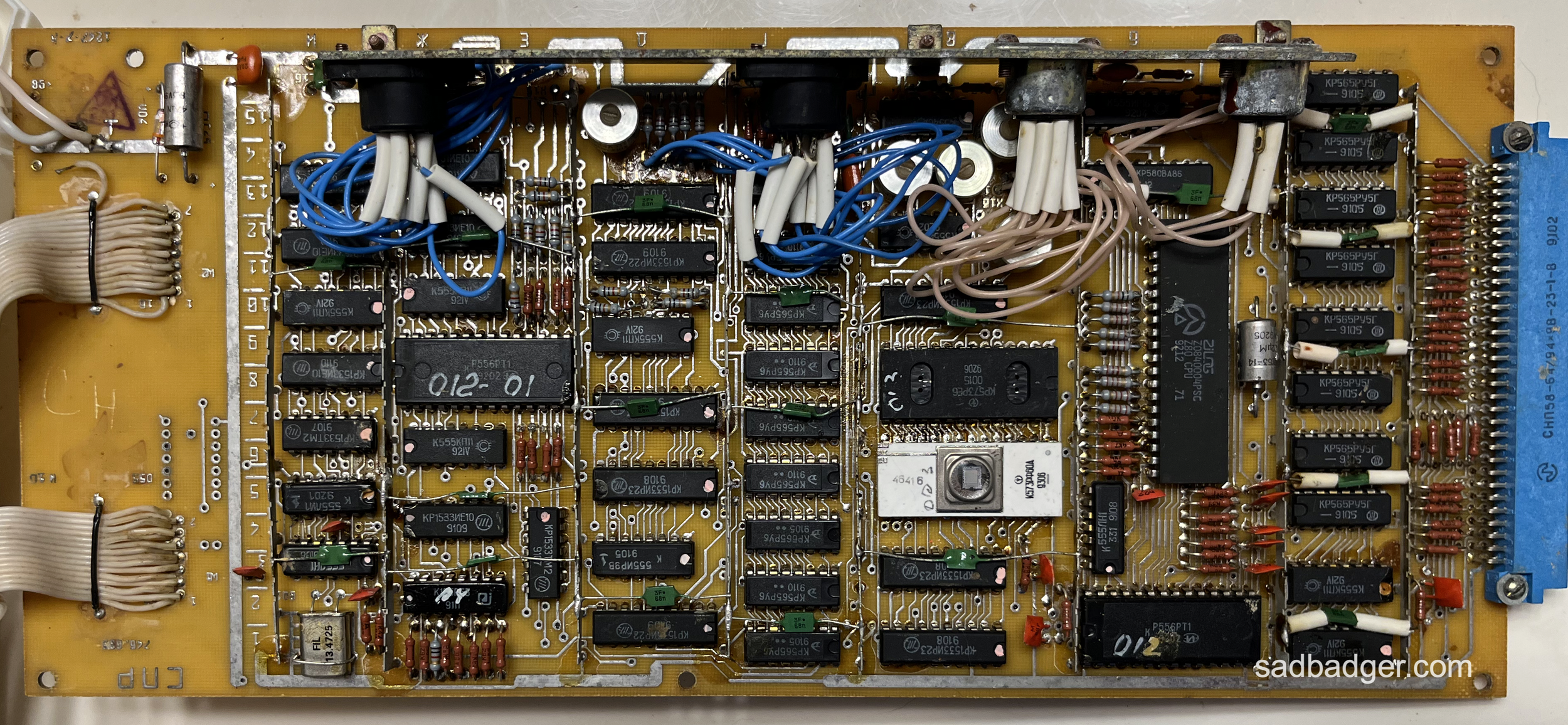
The main board
Open it up and you're looking at a well-laid-out single board computer — tidy for a Ukrainian factory product of the early 1990s. The build quality inside matches the impression the exterior gives: this wasn't a rush job.
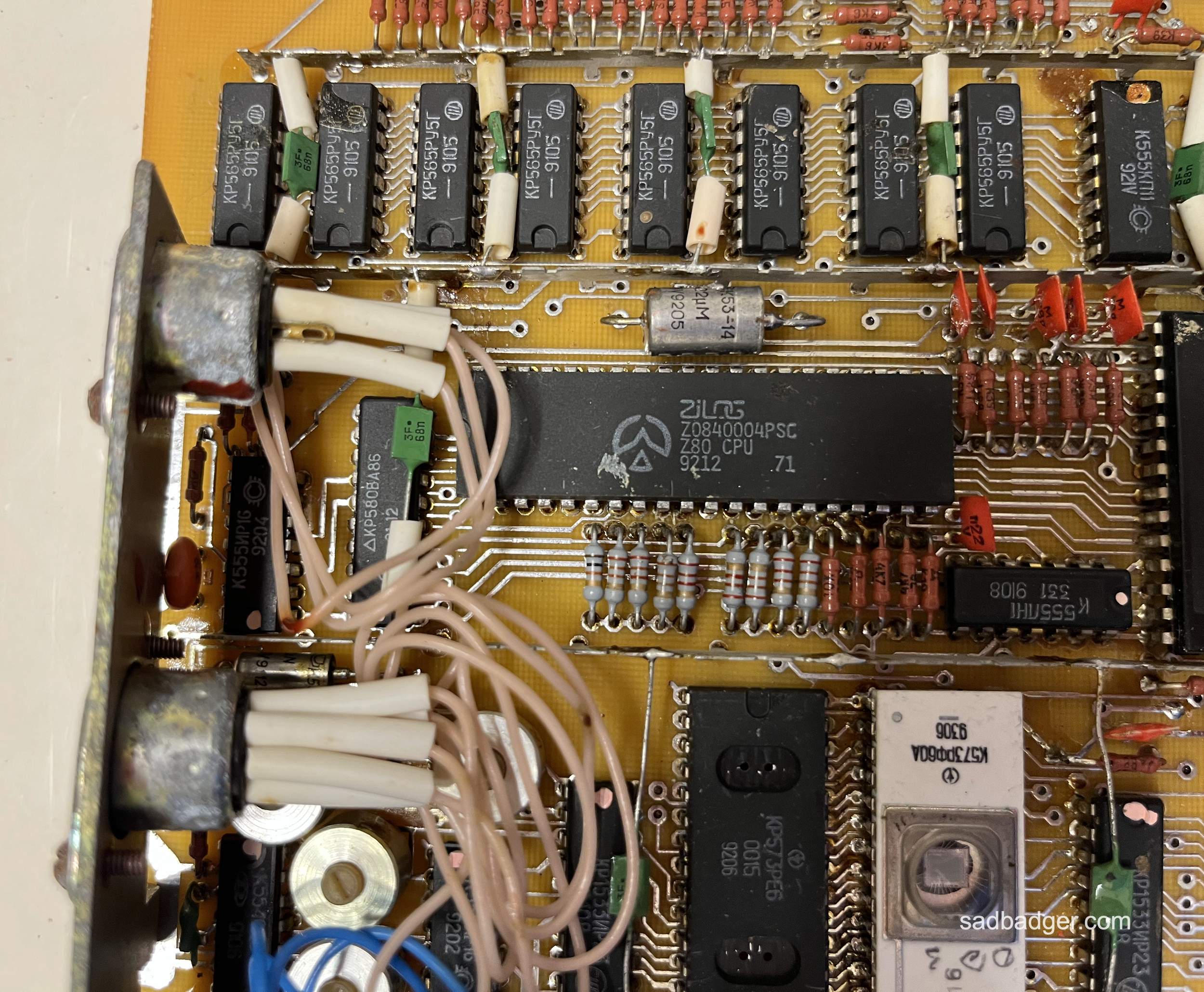
The Z80-compatible processor
The heart of the machine is a Soviet-manufactured Z80-compatible processor — the КР1858ВМ1 or a similar domestic clone. The Soviet Z80 has a fascinating history of its own: it was reverse-engineered from the original Zilog chip, fabricated on a slightly different process, and just different enough in pinout and timing to have caused the occasional compatibility headache for clone builders. The Robik's engineers navigated this well; software compatibility with genuine Spectrum titles is generally very good.
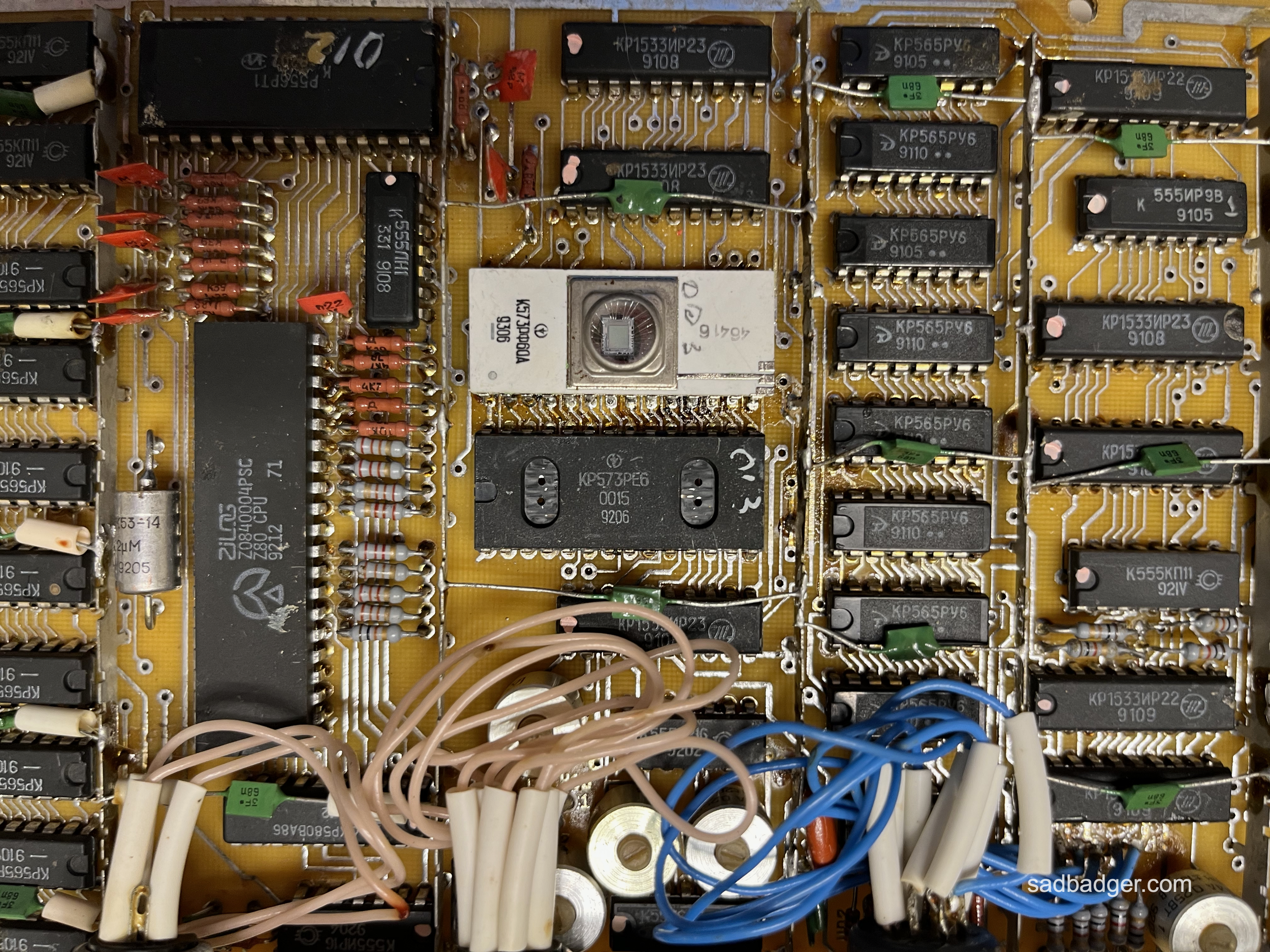
The EPROMs
The EPROMs hold the Robik's ROM — a localized version of the Spectrum's firmware, adapted for the Cyrillic character set and whatever other tweaks NPO Rotor made along the way.
The Four Sides
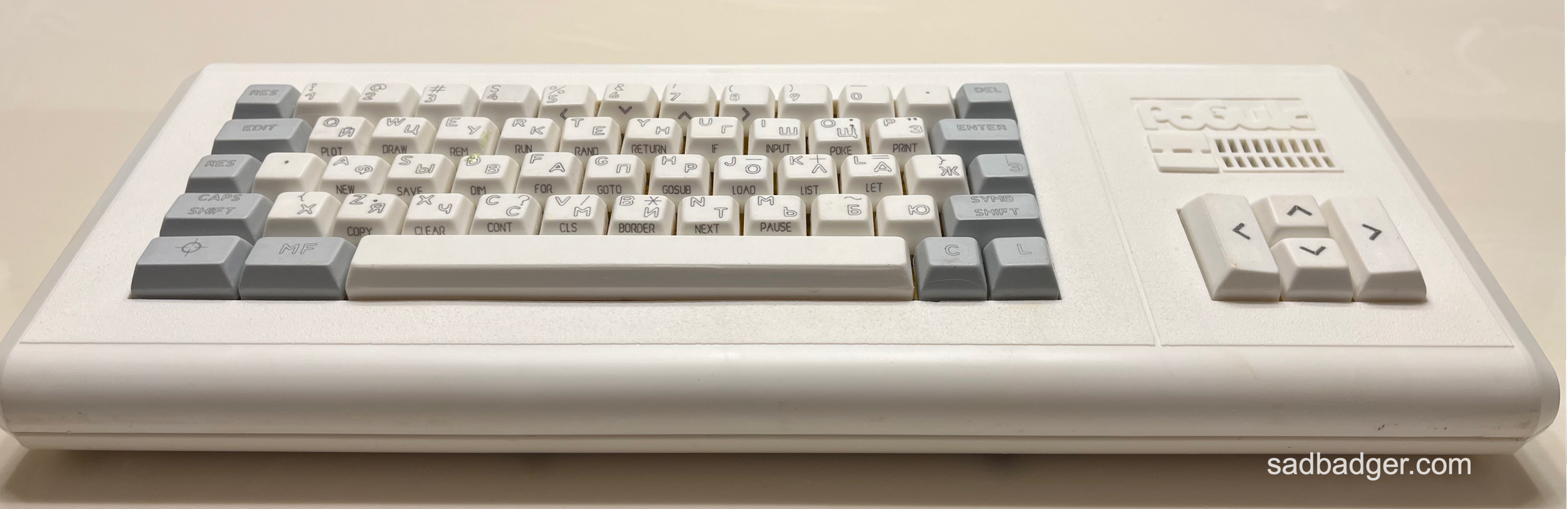
Front view
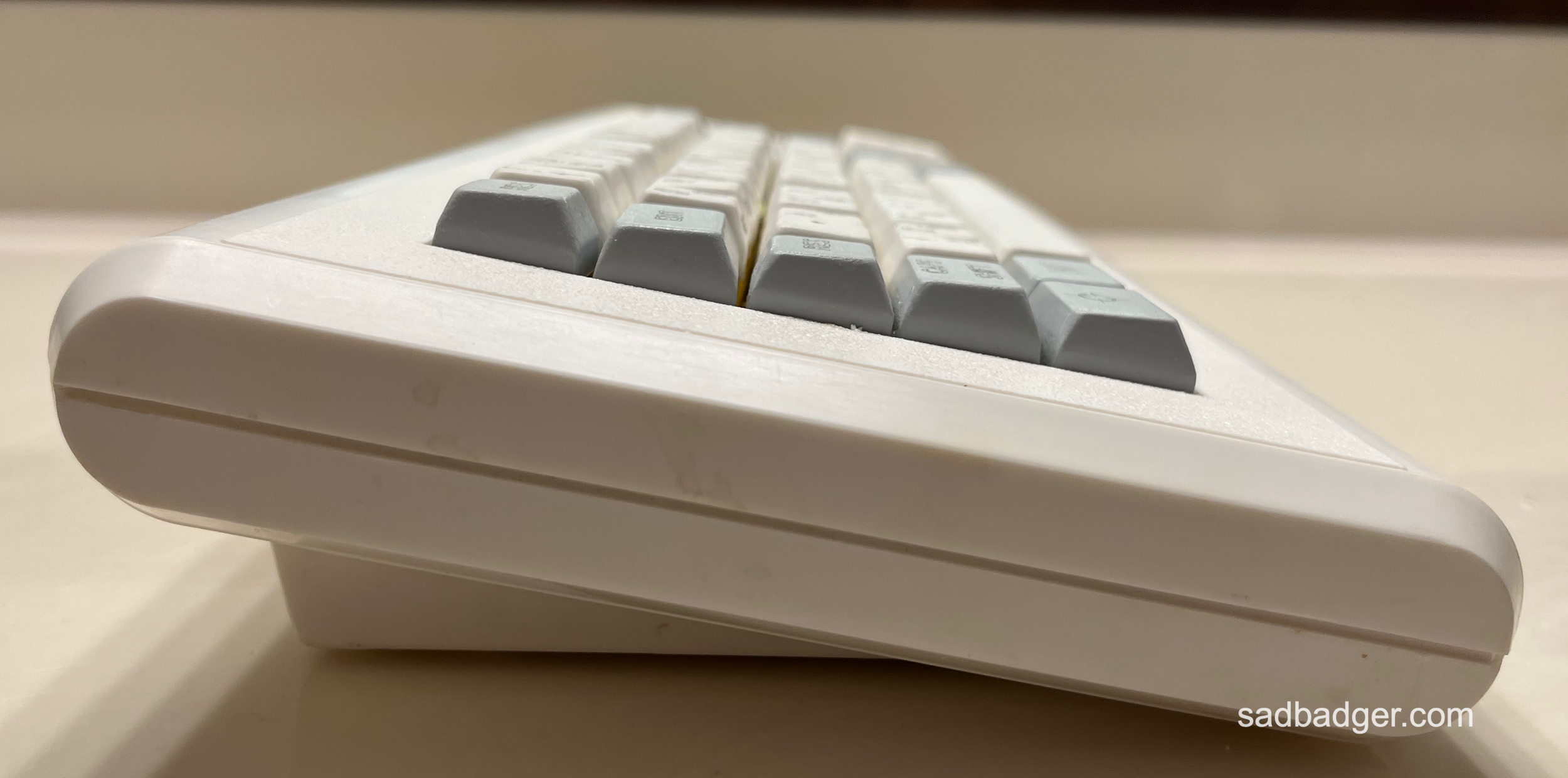
Left side
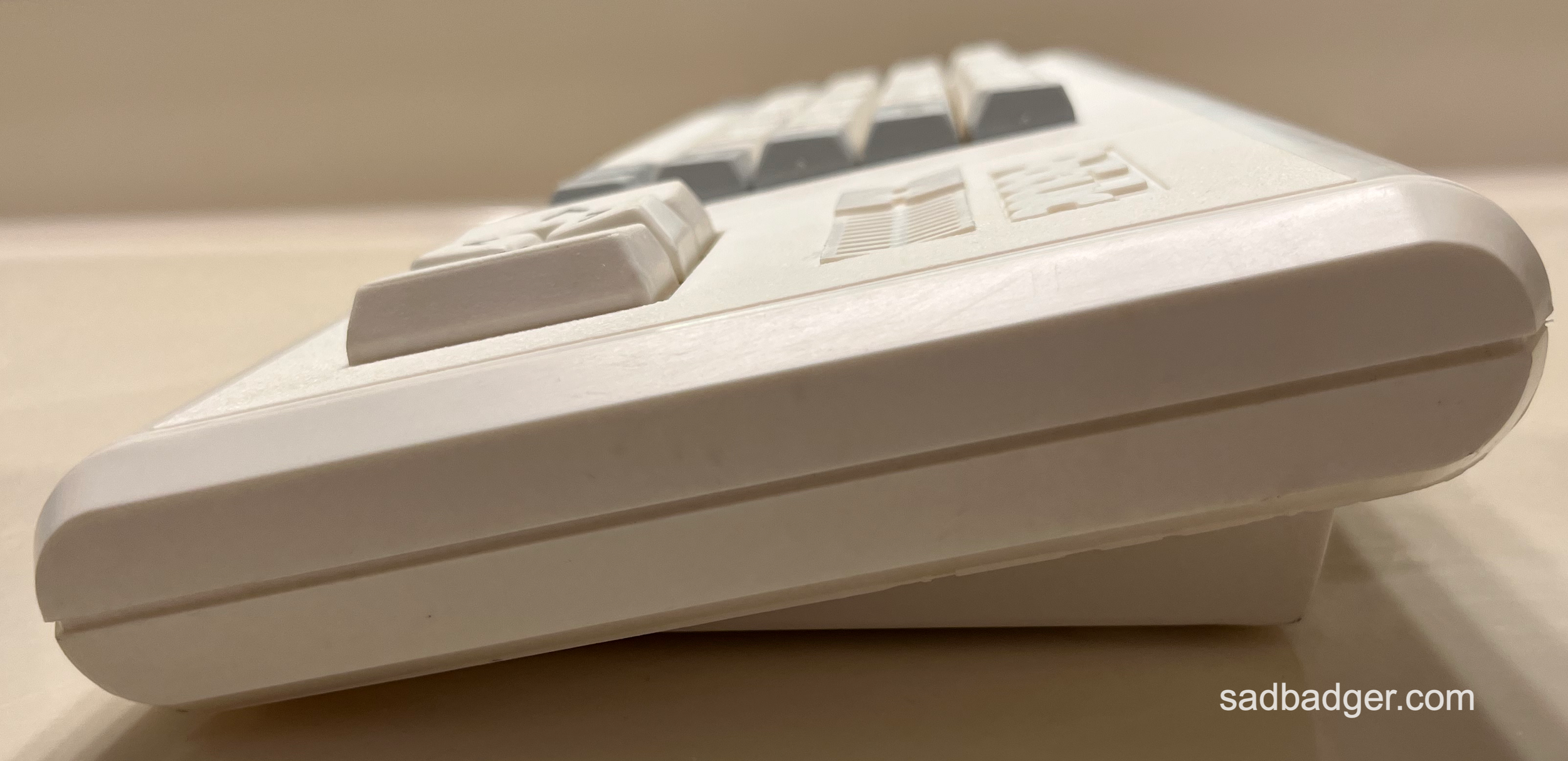
Right side
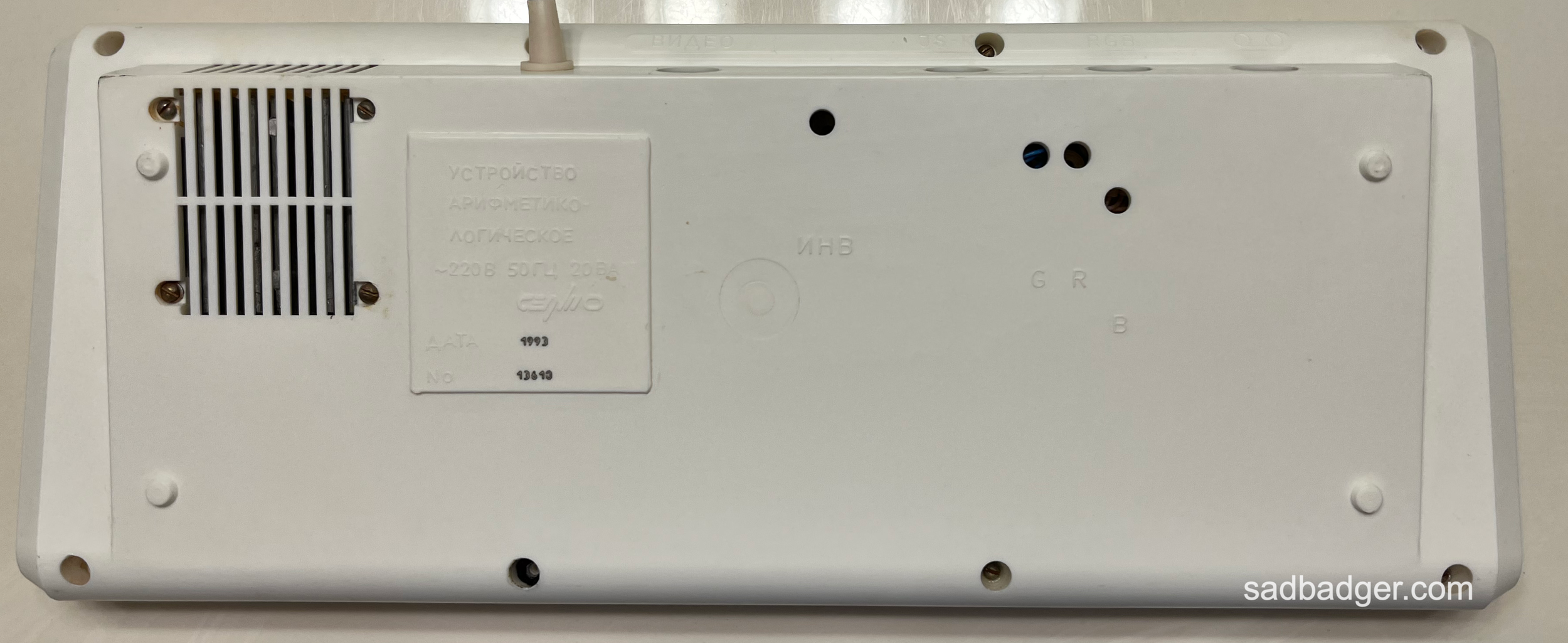
Bottom
The Robik is a monoblock design — keyboard and computer in a single unit. It's the format the ZX Spectrum used too, of course, but where the Spectrum is slim and almost toy-like, the Robik feels more substantial, more deliberate. The ventilation slots are sensibly placed, the seams are tight, and 35 years later the plastic hasn't yellowed badly at all.
Why It Matters
The Robik is, on paper, just another ZX Spectrum clone. And in a narrow technical sense, that's exactly what it is — a Z80-based machine designed to run Spectrum software, built in a country that couldn't easily import the real thing.
But zoom out and it becomes something more. It's a document of a specific moment: the late Soviet Union and early post-independence Ukraine, where engineers and factory workers were building home computers despite chronic component shortages, political upheaval, and an economy in freefall. NPO Rotor kept the Robik in production until 1998, nearly a decade after it launched — the machine outlasted the USSR by seven years. That's not just manufacturing inertia; someone was still buying these things, and someone was still making them.
For those of us who grew up with the ZX Spectrum, there's also something quietly inspiring about seeing what it became in another part of the world — the same keyboard logic, the same architecture, the same BASIC-in-ROM philosophy, but filtered through a completely different culture, language, and set of material constraints. The Cyrillic keycaps aren't an afterthought; they're the whole point. This machine was built to bring computing to Ukrainian and Russian speakers on their own terms.
It's not the rarest thing in my collection. It's not the most powerful, or the most technically interesting. But it might be the one I find myself just looking at most often.